Instantly Turn Documents & Web Content into Interactive Quizzes and Flashcards
Upload PDFs or URLs and let AI generate learning content in seconds. Create engaging quizzes, flashcards, assessments, and polls without any effort.
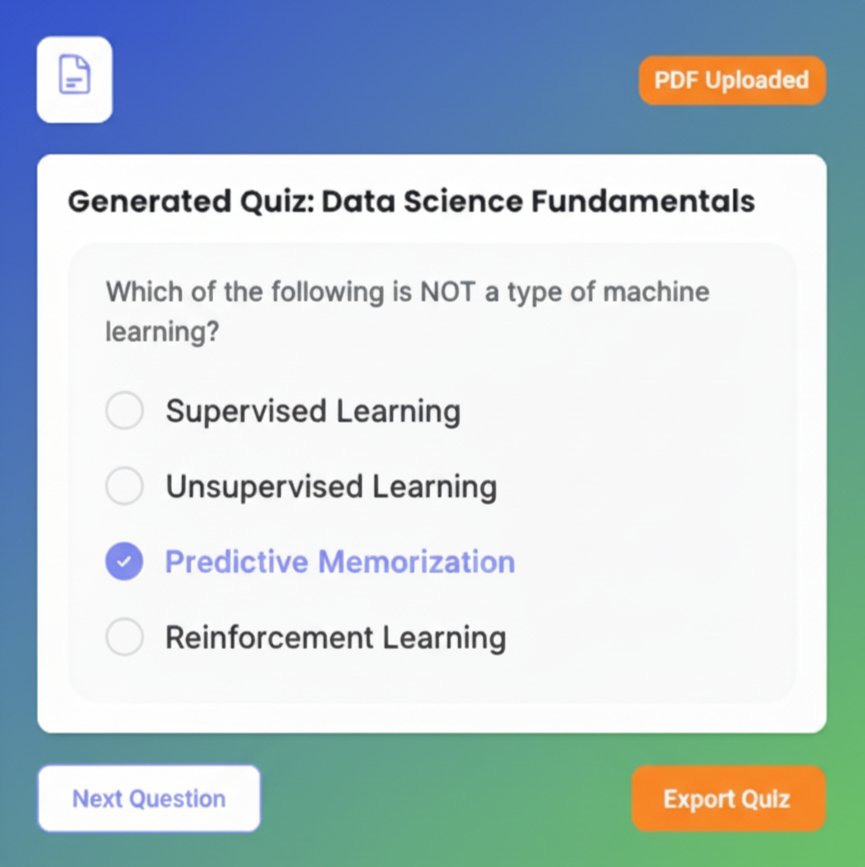
Everything You Need for Interactive Learning
Transform your static content into dynamic quizzes and assessments with our AI-powered tools. No more manual question creation.
PDF to Quiz
Generate comprehensive quizzes from your PDF documents with multiple question types.
URL Content Quiz Builder
Enter any webpage URL and our AI will crawl the content, understand the context, and create tailored quizzes based on the web material instantly.
Smart MCQs & Questions
Generate different question formats with intelligent answer options and explanations.
Interactive Polls
Create engaging polls with real-time results and audience insights visualization.
Export Results
Download quiz data in multiple formats with performance analytics and reports.
Collaboration
Share quizzes with teams and customize permissions for collaborative learning.
Making Learning Simple, Fun, and Inspiring
At Quizpomme, we believe learning should be more than memorizing facts — it should feel exciting, motivating, and rewarding.Our smart AI turns documents and web content into quizzes and flashcards that make it easier to understand, remember, and enjoy new knowledge.
For students, it's a way to study with less stress and more confidence. For teachers and trainers, it's a helping hand that saves time and keeps learners engaged. With Quizpomme, learning isn't just effective — it's enjoyable.
Who Uses Quizpomme?
-
Educators who want to quickly create assessments from course materials
-
Corporate Trainers looking to assess knowledge retention from training materials
-
Content Creators who want to increase audience engagement with interactive elements
How It Works
Upload or Link Content
Simply drag and drop your PDF document or paste a URL to get started.
AI Content Analysis
Our advanced AI analyzes content to identify key concepts, facts and relationships for optimal quiz and flashcard creation.
Smart Quiz & Flashcard Generation
The system creates relevant questions with intelligent answer options and interactive flashcards for enhanced learning.
Customize & Share
Edit questions, customize quiz and flashcard settings, and share with your audience.
Latest Generated Quizzes
See examples of AI-generated quizzes from various domains. Our technology adapts to any subject matter or content type.
Maths quiz
Math quiz at a year 9 level Includes almost everything e.g. pythagoras , angles, area of shapes
motivation and learning
Motivation and Learning 1. What is Motivation Motivation is the internal force that pushes a person to act, persist, and achieve goals. Psychologists describe it as the desire that initiates and sustains behavior. When people succeed, that success often creates new motivation, encouraging further effort and growth. In learning, motivation acts as an energy source that combines effort, thinking, and emotional engagement. Without motivation, even capable learners struggle to reach long-term goals. ________________________________________ 2. Motivation in Language Learning Motivation is essential in language learning. It is what starts learning, keeps learners going, and shapes their attitudes. Motivated learners: • Set and reach goals • Persist despite difficulties • Participate actively • Develop positive attitudes toward learning Different learners are motivated differently, so motivation must be supported through suitable strategies and environments. ________________________________________ 3. Types of Motivation Intrinsic Motivation intrinsic motivation comes from within. Learners engage in activities because they enjoy them or find them meaningful. It is linked to curiosity, satisfaction, and a sense of achievement. This type of motivation supports deep learning, creativity, and long-term success. According to Deci and Ryan, (Self-determination theory), it includes: • Motivation to know: learning for curiosity and interest. • Motivation to accomplish: satisfaction from mastering tasks. • Motivation to experience stimulation: enjoyment and emotional excitement. Intrinsic motivation is especially important in language learning because it encourages persistence and self-efficacy. Extrinsic Motivation Comes from external rewards or pressure, such as grades, praise, or avoiding punishment. While it may not be as powerful as intrinsic motivation, it can help start learning. Most learners experience a mix of both types. External rewards can support or harm intrinsic motivation depending on how they affect self-confidence and independence. ________________________________________ 4. Maslow’s Hierarchy of Needs Maslow explains motivation through five levels of human needs: 1. Physiological needs: sleep, food, rest 2. Safety needs: security, stability 3. Love and Belongingness: social connection and acceptance 4. Esteem: respect, recognition, confidence 5. Self-actualization: reaching one’s full potential In learning, students must satisfy lower needs before higher motivation can develop. When these needs are met, intrinsic motivation becomes stronger. ________________________________________ 6. Importance of Motivation in learning Motivation: • Improves learning and retention • Increases effort and persistence • Encourages life-long learning • Enhances deep thinking • Boosts classroom engagement • Predicts academic success Motivated learners are more resilient and engaged, and successful academically.
Maths quiz
Math quiz at a year 9 level Includes almost everything e.g. pythagoras , angles, area of shapes
motivation and learning
Motivation and Learning 1. What is Motivation Motivation is the internal force that pushes a person to act, persist, and achieve goals. Psychologists describe it as the desire that initiates and sustains behavior. When people succeed, that success often creates new motivation, encouraging further effort and growth. In learning, motivation acts as an energy source that combines effort, thinking, and emotional engagement. Without motivation, even capable learners struggle to reach long-term goals. ________________________________________ 2. Motivation in Language Learning Motivation is essential in language learning. It is what starts learning, keeps learners going, and shapes their attitudes. Motivated learners: • Set and reach goals • Persist despite difficulties • Participate actively • Develop positive attitudes toward learning Different learners are motivated differently, so motivation must be supported through suitable strategies and environments. ________________________________________ 3. Types of Motivation Intrinsic Motivation intrinsic motivation comes from within. Learners engage in activities because they enjoy them or find them meaningful. It is linked to curiosity, satisfaction, and a sense of achievement. This type of motivation supports deep learning, creativity, and long-term success. According to Deci and Ryan, (Self-determination theory), it includes: • Motivation to know: learning for curiosity and interest. • Motivation to accomplish: satisfaction from mastering tasks. • Motivation to experience stimulation: enjoyment and emotional excitement. Intrinsic motivation is especially important in language learning because it encourages persistence and self-efficacy. Extrinsic Motivation Comes from external rewards or pressure, such as grades, praise, or avoiding punishment. While it may not be as powerful as intrinsic motivation, it can help start learning. Most learners experience a mix of both types. External rewards can support or harm intrinsic motivation depending on how they affect self-confidence and independence. ________________________________________ 4. Maslow’s Hierarchy of Needs Maslow explains motivation through five levels of human needs: 1. Physiological needs: sleep, food, rest 2. Safety needs: security, stability 3. Love and Belongingness: social connection and acceptance 4. Esteem: respect, recognition, confidence 5. Self-actualization: reaching one’s full potential In learning, students must satisfy lower needs before higher motivation can develop. When these needs are met, intrinsic motivation becomes stronger. ________________________________________ 6. Importance of Motivation in learning Motivation: • Improves learning and retention • Increases effort and persistence • Encourages life-long learning • Enhances deep thinking • Boosts classroom engagement • Predicts academic success Motivated learners are more resilient and engaged, and successful academically.
multi inteligences theory
Lecture 3: The Diverse Mind – Multiple Intelligences Theory 1. The Revolution: Howard Gardner • The Old View: Intelligence was a single unit measured by IQ tests2222📏 • The New View (1983): Intelligence is a "multifaceted construct" with different ways of processing information3333. 2.The 9 Intelligences4 Intelligence Known as... Key Strength Typical Career Linguistic Word Smart Using language effectively5 Journalist, Novelist6 Logical-Math Logic Smart Reasoning and numerical data7 Scientist, Analyst8 Spatial-Visual Picture Smart Thinking in 3D; using maps/models9 Architect, Pilot10 Bodily-Kinaesthetic Body Smart Physical dexterity and movement11 Athlete, Surgeon12 Musical Music Smart Recognizing rhythms and tones13 Composer, Singer14 Interpersonal People Smart Understanding and relating to others15 Teacher, Mediator16 Intrapersonal Self Smart Self-awareness and reflection17 Philosopher, Strategist18 Naturalistic Nature Smart Recognizing patterns in nature19 Botanist, Farmer20 Existential Smart Life Pondering profound questions21 Philosopher, Theorist22 3. Educational Implications • Personalized Learning: “Individually configured education” that caters to unique styles23👤 • Diverse Assessment: Moving beyond standardized tests to evaluate abilities across all intelligences24242424. 📝 • Creative Curriculum: Using visual aids for spatial learners or group work for interpersonal learners 🎨 4. The Criticisms (Crucial for high grades!) • Lack of Evidence : Some argue there isn't enough scientific proof for all eight/nine26. • Overlap : Logical and spatial skills often work together, making them hard to separate27 • Cultural Bias : It is rooted in Western views and might confuse “talents” with “intelligences”28. 🌍
study habits and ideal envirement
Lecture 2: The Routine – Study Habits & Learning Environments 1. The Scientific Definition • What are Study Habits? They are a combination of two specific types of strategies: o Cognitive Strategies: Mental processes like attention, memory, and problem-solving. o Metacognitive Strategies: Awareness and regulation of your own thinking and learning. o Why it matters: Combining these fosters lifelong learning motivation. 2. The 10 Characteristics of Effectiveness To be successful, clothes must be: 1. Consistent: Regular routines reduce stress. 2. Goal-Oriented: Using SMART goals (Short-term for achievement, Long-term for direction). 3. Active Learning: Summarizing and self-testing rather than passive reading. 4. Time Managed: Using tools like Pomodoro and avoiding procrastination. 5. Adaptable: Adjusting to different subjects (flexibility). 6. Focused: "Single-tasking" rather than multitasking. 7. Regularly Reviewed: Using Spaced Repetition to prevent forgetting. 8. Self-Monitored: Journaling or reflecting on progress. 9. Resourceful: Using various tools (tutors, online tools). 10. Balanced: Prioritizing sleep, nutrition, and exercise. 3. The Ideal Environment Your environment directly impacts your ability to absorb information.Dr. Talha breaks this into three categories: • Physical: Quiet, natural lighting, optimal temperature (not too hot/cold), and ergonomic seating (avoid studying in bed!). • Psychological: Low-stress to boost memory, mindfulness practices (deep breathing), and a positive mindset. • Practical: Having all supplies within reach and sticking to a consistent time/place to signal "focus mode" to your brain. 4. The "Golden" Conclusion • The Takeaway: The ideal environment is unique to you—you must experiment to find what works.
introduction to study skills
Lecture 1: The Foundation – Introduction to Study Skills 1. The Core Definitions • What is a Skill? It is not luck; it is a developed ability.It is a specific training or ability to perform a task with competence, honed through practice, feedback, and reflection. • What are Study Skills? No one is born with them.They are "academic enablers" and critical tools that must be learned. o Academic Definition: Competencies associated with acquiring, recording, organizing, synthesizing, remembering, and using information. 2. The 10 Pillars of Success Dr. Talha outlines ten specific areas essential for university success: 1. Time Management: Prioritizing and avoiding procrastination. 2. Note-Taking: Using methods like Cornell or Mind Mapping. 3. Active Reading: Skimming, scanning, and questioning (not just looking at words). 4. Critical Thinking: Analyzing rather than just memorizing. 5. Memory Techniques: Mnemonics and spaced repetition. 6. Exam Preparation: Using past papers and mock tests. 7. Stress Management: Healthy habits to manage anxiety. 8. Concentration: Minimizing distractions (eg, Pomodoro technique). 9. Organization: Keeping resources accessible. 10. Collaboration: Group study to reinforce learning. 3. The "Golden" Conclusion • The Philosophy: Study skills are not about working harder; they are about working smarter.
Guest the food
Make a funny quiz about - guest the food

History Of Indian Sub Continent
https://www.quizpomme.com/q/quiz/finished/ca2455d3-4be0-4b
Simple, Transparent Pricing
Choose the plan that works for you. All plans include core AI quiz generation features.
Free
Free plan
- Create up to 3 quizzes
- Create up to 3 flashcards
- Generate quizzes from PDFs/URLs
- Display leaderboard
- Share results with participants
- Email participants
Pro - Monthly
Pro - Monthly
- Create up to 1000 quizzes
- Create up to 1000 flashcards
- Generate quizzes from PDFs/URLs
- Display leaderboard
- Share results with participants
- Email participants
Pro - Yearly
Pro - Yearly
- Create up to 1000 quizzes
- Create up to 1000 flashcards
- Generate quizzes from PDFs/URLs
- Display leaderboard
- Share results with participants
- Email participants
Transform Your Content Into Interactive Learning Experiences
Join thousands of educators and content creators who are using AI to revolutionize learning.