Instantly Turn Documents & Web Content into Interactive Quizzes and Flashcards
Upload PDFs or URLs and let AI generate learning content in seconds. Create engaging quizzes, flashcards, assessments, and polls without any effort.
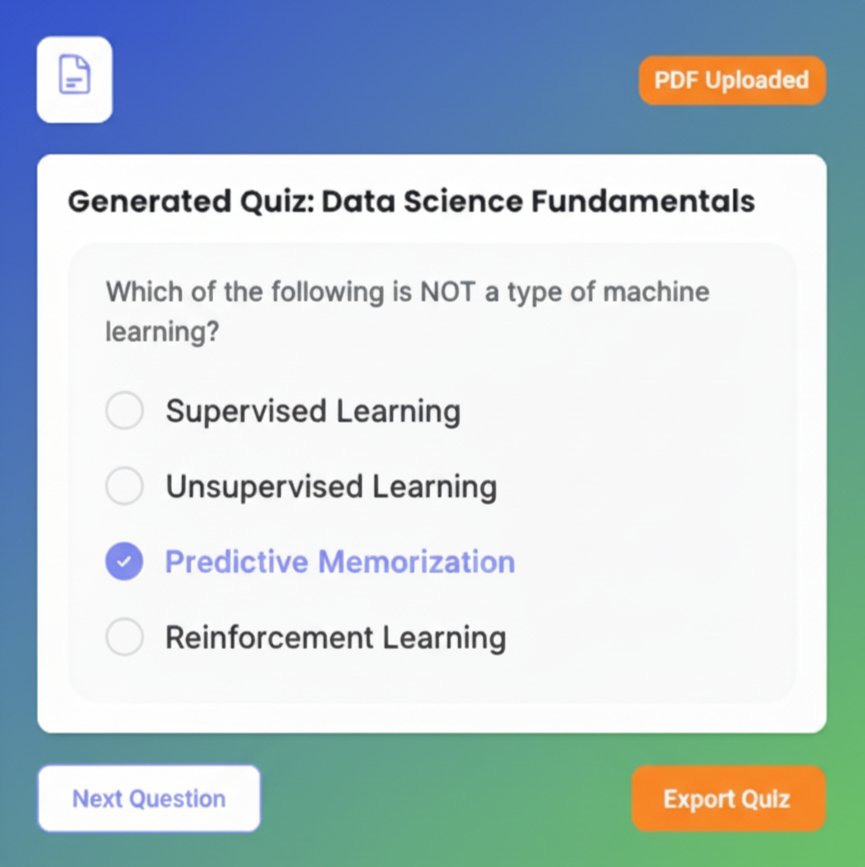
Everything You Need for Interactive Learning
Transform your static content into dynamic quizzes and assessments with our AI-powered tools. No more manual question creation.
PDF to Quiz
Generate comprehensive quizzes from your PDF documents with multiple question types.
URL Content Quiz Builder
Enter any webpage URL and our AI will crawl the content, understand the context, and create tailored quizzes based on the web material instantly.
Smart MCQs & Questions
Generate different question formats with intelligent answer options and explanations.
Interactive Polls
Create engaging polls with real-time results and audience insights visualization.
Export Results
Download quiz data in multiple formats with performance analytics and reports.
Collaboration
Share quizzes with teams and customize permissions for collaborative learning.
Making Learning Simple, Fun, and Inspiring
At Quizpomme, we believe learning should be more than memorizing facts — it should feel exciting, motivating, and rewarding.Our smart AI turns documents and web content into quizzes and flashcards that make it easier to understand, remember, and enjoy new knowledge.
For students, it's a way to study with less stress and more confidence. For teachers and trainers, it's a helping hand that saves time and keeps learners engaged. With Quizpomme, learning isn't just effective — it's enjoyable.
Who Uses Quizpomme?
-
Educators who want to quickly create assessments from course materials
-
Corporate Trainers looking to assess knowledge retention from training materials
-
Content Creators who want to increase audience engagement with interactive elements
How It Works
Upload or Link Content
Simply drag and drop your PDF document or paste a URL to get started.
AI Content Analysis
Our advanced AI analyzes content to identify key concepts, facts and relationships for optimal quiz and flashcard creation.
Smart Quiz & Flashcard Generation
The system creates relevant questions with intelligent answer options and interactive flashcards for enhanced learning.
Customize & Share
Edit questions, customize quiz and flashcard settings, and share with your audience.
Latest Generated Quizzes
See examples of AI-generated quizzes from various domains. Our technology adapts to any subject matter or content type.
academic reading
Reading for Academic Purposes: windows system cmd I. Introduction • Definition: Reading is a cognitive process of constructing meaning from written text, not just decoding symbols. • Nature of Reading: It is usually a silent, individual activity that activates comprehension, analysis, memory, and imagination. • Purpose: Approach and pace must adapt based on whether the goal is enjoyment or study. 1. Understanding Reading as a Cognitive Process • Reading involves decoding and comprehension, shaped by purpose, context, and strategy. 2. Why Read with Purpose? • Active Engagement: Focused reading involves choosing a strategy to achieve a clear objective rather than passively absorbing words. • Efficiency: Tailoring methods to outcomes saves time and deepens understanding. 3. Reading at University • Expand Knowledge: Independent reading of textbooks and articles is required to deepen lecture topics and form personal stances. • Preparation: Pre-class reading familiarizes students with content, reducing stress and increasing focus during discussions. • Assignments/Exams: Information gathering is necessary for continuous evaluation and effective exam revision. • Language Improvement: Constant exposure to English improves vocabulary, grammar, and sentence structure. • Efficiency: Students must adopt quick, selective strategies to manage high reading volumes. ________________________________________ II. Benefits of Purposeful Reading • Focus: Filters out irrelevant information. • Retention: Actively searching for specific info aids memory. • Time Management: Avoids unnecessary sections. • Confidence: Reduces anxiety when managing large volumes of text. • Analysis: Improves evaluation of relevant data and effective note-taking. ________________________________________ III. Reading Strategies • Techniques are divided into two main categories: Quick Reading (e.g., skimming) and Slow Reading (e.g., comprehension). 1. Quick Reading • Definition: A time-saving technique to extract information without reading word-for-word. • A. Skimming: Used to capture the general theme or "gist." o Techniques: Read titles, introductions, conclusions, and the first sentence of paragraphs. o Types: Pre-viewing (advanced look), Over-viewing (thorough look), and Re-viewing (refreshing memory). • B. Scanning: Used to locate specific details (dates, names, figures). o Techniques: Rapid eye movement, skipping unrelated sections, and only reading full sentences once the target is found. • C. Surveying: A pre-reading strategy to understand a text's structure (table of contents, headings, visuals) before in-depth reading. Improving Reading Speed: • Use finger tracking to guide eyes. • Reduce subvocalisation (saying words in your head). • Practice chunking (reading groups of 3-5 words at a time). 2. Slow Reading (Reading Comprehension) • Definition: Focusing on thorough comprehension, arguments, and nuances. • Techniques: Careful reading of every word, identifying main ideas, and making connections to prior knowledge. • A. Reading for the Main Idea: Grasping the essence of a text via topic sentences and thesis statements. • B. Revision Reading: Re-reading familiar material to reinforce understanding and clarify misunderstandings before exams. • C. Asking the Right Questions: Evaluating the text’s purpose, audience, claims, and supporting evidence. ________________________________________ IV. Conclusion • Alignment: Methodical reading requires aligning strategy with purpose. • Adaptability: Success depends on being an intentional, flexible reader who can tailor their approach to the text at hand.
academic reading
Reading for Academic Purposes: windows system cmd I. Introduction • Definition: Reading is a cognitive process of constructing meaning from written text, not just decoding symbols. • Nature of Reading: It is usually a silent, individual activity that activates comprehension, analysis, memory, and imagination. • Purpose: Approach and pace must adapt based on whether the goal is enjoyment or study. 1. Understanding Reading as a Cognitive Process • Reading involves decoding and comprehension, shaped by purpose, context, and strategy. 2. Why Read with Purpose? • Active Engagement: Focused reading involves choosing a strategy to achieve a clear objective rather than passively absorbing words. • Efficiency: Tailoring methods to outcomes saves time and deepens understanding. 3. Reading at University • Expand Knowledge: Independent reading of textbooks and articles is required to deepen lecture topics and form personal stances. • Preparation: Pre-class reading familiarizes students with content, reducing stress and increasing focus during discussions. • Assignments/Exams: Information gathering is necessary for continuous evaluation and effective exam revision. • Language Improvement: Constant exposure to English improves vocabulary, grammar, and sentence structure. • Efficiency: Students must adopt quick, selective strategies to manage high reading volumes. ________________________________________ II. Benefits of Purposeful Reading • Focus: Filters out irrelevant information. • Retention: Actively searching for specific info aids memory. • Time Management: Avoids unnecessary sections. • Confidence: Reduces anxiety when managing large volumes of text. • Analysis: Improves evaluation of relevant data and effective note-taking. ________________________________________ III. Reading Strategies • Techniques are divided into two main categories: Quick Reading (e.g., skimming) and Slow Reading (e.g., comprehension). 1. Quick Reading • Definition: A time-saving technique to extract information without reading word-for-word. • A. Skimming: Used to capture the general theme or "gist." o Techniques: Read titles, introductions, conclusions, and the first sentence of paragraphs. o Types: Pre-viewing (advanced look), Over-viewing (thorough look), and Re-viewing (refreshing memory). • B. Scanning: Used to locate specific details (dates, names, figures). o Techniques: Rapid eye movement, skipping unrelated sections, and only reading full sentences once the target is found. • C. Surveying: A pre-reading strategy to understand a text's structure (table of contents, headings, visuals) before in-depth reading. Improving Reading Speed: • Use finger tracking to guide eyes. • Reduce subvocalisation (saying words in your head). • Practice chunking (reading groups of 3-5 words at a time). 2. Slow Reading (Reading Comprehension) • Definition: Focusing on thorough comprehension, arguments, and nuances. • Techniques: Careful reading of every word, identifying main ideas, and making connections to prior knowledge. • A. Reading for the Main Idea: Grasping the essence of a text via topic sentences and thesis statements. • B. Revision Reading: Re-reading familiar material to reinforce understanding and clarify misunderstandings before exams. • C. Asking the Right Questions: Evaluating the text’s purpose, audience, claims, and supporting evidence. ________________________________________ IV. Conclusion • Alignment: Methodical reading requires aligning strategy with purpose. • Adaptability: Success depends on being an intentional, flexible reader who can tailor their approach to the text at hand.
study groups
LECRTURE N2 : STUDY GROUPS 1. Definition A study group is a small group (4–6 students) from the same class who meet regularly to study and help each other succeed. 2. Why Study Groups Matter Study groups: • encourage active learning (discussion, questioning, explaining) • improve understanding + retention • develop critical thinking + communication skills • reduce procrastination through motivation • help students learn new study habits from each other 3. What a Study Group is / is NOT ✅ IS: • A place for collaboration and mutual support • Focused on academic improvement ❌ IS NOT: • A replacement for class • A shortcut for assignments • A social hangout 4. Types of Study Groups 📌 1. Project Groups • Work on a shared task (presentation, research…) • Require: o equal contribution o coordination o accountability 📌 2. Discussion Groups • Focus on understanding lessons • Require: o preparation before meeting o participation o idea-sharing 5. How to Build an Effective Study Group ✔ Group size: 4–6 (balance between coordination and participation) ✔ Location: quiet, no distractions ✔ Plan of work: clear rules and expectations ✔ Individual preparation: everyone comes prepared ✔ Leadership: rotate roles (coordinator/moderator) 6. Common Problems • Different commitment levels (lazy vs serious members) • Time issues (lateness, schedules) • Dominance (one person talks too much) • Personality differences (introvert/extrovert) • Unequal work • Communication problems • Different goals (serious vs social mindset) 7. Solutions to Conflicts • Open communication (talk calmly, respectfully) • Clear rules & expectations • Equal task distribution • Flexibility & compromise • Rotate leadership • Focus on academic goals • Set attendance rules 8. Advantages of Study Groups • Different perspectives • Better understanding (teach = learn twice) • Motivation & accountability • Confidence boost • Better memory (retention) • Teamwork skills • Critical thinking 9. Characteristics of an Effective Group • Clear goals • Collaboration • Respect • Shared responsibility • Open communication • Balanced participation • Good conflict management
hamlet
⚔️ Hamlet by William Shakespeare 🔹 I. Shakespeare as Playwright William Shakespeare (1564–1616) was a Renaissance playwright known for: • psychological depth • poetic language • complex characters His plays explore universal themes such as: 👉 ambition 👉 revenge 👉 guilt 👉 mortality 👉 corruption Unlike simple heroes and villains, Shakespeare creates morally conflicted characters, which makes his works timeless. ________________________________________ 🔹 II. Characteristics of Shakespearean Tragedy 1. The Tragic Hero The tragic hero is noble but has a fatal flaw (hamartia). Hamlet, Prince of Denmark, is intelligent and reflective, but his flaw is hesitation and overthinking. Instead of acting quickly, he questions morality, truth, and existence. 📌 Quote: “O that this too too solid flesh would melt…” This shows his depression and disgust with the world. ________________________________________ 2. Conflict The play contains: • external conflict → Hamlet vs Claudius • internal conflict → Hamlet vs himself His greatest struggle is psychological, involving doubt, conscience, and fear. ________________________________________ 3. Supernatural Elements The Ghost introduces uncertainty and raises questions about truth and morality. 📌 Quote: “Be thou a spirit of health or goblin damn’d…” Hamlet doubts whether the Ghost is good or evil. ________________________________________ 4. Fate and Moral Disorder Denmark is presented as corrupted and diseased. 📌 Quote: “Something is rotten in the state of Denmark.” The “rot” symbolizes political and moral corruption spreading through the kingdom. ________________________________________ 5. Violence and Catastrophe The tragedy ends in bloodshed and death. Hamlet’s death restores order but causes suffering and catharsis. ________________________________________ 🔹 III. Plot Summary 1. Opening: Uncertainty and Corruption The play begins in darkness and suspicion at Elsinore Castle. 📌 Important: • Ghost appears • atmosphere = anxiety and instability • corruption already exists 👉 “Something is rotten in the state of Denmark.” ________________________________________ 2. Gertrude’s Remarriage Hamlet is disgusted by Gertrude marrying Claudius so quickly after his father’s death. 📌 Quote: “Frailty, thy name is woman!” He sees her remarriage as betrayal and moral weakness. ________________________________________ 3. The Ghost’s Revelation The Ghost reveals Claudius murdered King Hamlet using poison. 📌 Quote: “The serpent that did sting thy father’s life / Now wears his crown.” Poison symbolizes hidden corruption and betrayal. ________________________________________ 4. Feigned Madness Hamlet pretends to be mad to investigate Claudius. 📌 Quote: “I am but mad north-north-west…” His madness is strategic, but later mixes with real emotional instability. 5. Existential Crisis Hamlet questions life, death, and suffering. 📌 Famous quote: “To be, or not to be…” This reflects his philosophical and psychological conflict. ________________________________________ 6. Play Within the Play Hamlet stages a play to expose Claudius’s guilt. 📌 Quote: “The play’s the thing / Wherein I’ll catch the conscience of the king.” Claudius’s reaction confirms his guilt. ________________________________________ 7. Polonius’s Death and Ophelia’s Madness Hamlet accidentally kills Polonius. After this, Ophelia experiences real madness and grief. 📌 Contrast: • Hamlet’s madness = performed • Ophelia’s madness = genuine collapse ________________________________________ 8. Graveyard Scene and Comic Relief The gravedigger scene provides comic relief but deepens the theme of mortality. 📌 Yorick’s skull symbolizes: 👉 death 👉 decay 👉 equality of all humans ________________________________________ 9. Final Duel and Catastrophe Claudius and Laertes plan to kill Hamlet with poison. Result: • Gertrude dies • Laertes dies • Claudius dies • Hamlet dies Fortinbras honors Hamlet with a military funeral, recognizing his lost potential. ________________________________________ 🔹 IV. Major Symbols in Hamlet 1. Rot and Decay Symbolize corruption and moral disorder. ________________________________________ 2. The Ghost Represents: 👉 memory 👉 justice 👉 uncertainty ________________________________________ 3. Poison Represents hidden corruption and betrayal. ________________________________________ 4. Yorick’s Skull Represents mortality and inevitability of death. ________________________________________ 5. Madness Blurs the line between appearance and reality. 📌 Contrast: • Hamlet → feigned madness • Ophelia → real madness ________________________________________ 🔹 Conclusion Hamlet goes beyond a simple revenge tragedy. It explores consciousness, morality, doubt, and death through the fall of a prince whose intelligence becomes the cause of his destruction. ________________________________________
academic reading
Reading for Academic Purposes: windows system cmd I. Introduction • Definition: Reading is a cognitive process of constructing meaning from written text, not just decoding symbols. • Nature of Reading: It is usually a silent, individual activity that activates comprehension, analysis, memory, and imagination. • Purpose: Approach and pace must adapt based on whether the goal is enjoyment or study. 1. Understanding Reading as a Cognitive Process • Reading involves decoding and comprehension, shaped by purpose, context, and strategy. 2. Why Read with Purpose? • Active Engagement: Focused reading involves choosing a strategy to achieve a clear objective rather than passively absorbing words. • Efficiency: Tailoring methods to outcomes saves time and deepens understanding. 3. Reading at University • Expand Knowledge: Independent reading of textbooks and articles is required to deepen lecture topics and form personal stances. • Preparation: Pre-class reading familiarizes students with content, reducing stress and increasing focus during discussions. • Assignments/Exams: Information gathering is necessary for continuous evaluation and effective exam revision. • Language Improvement: Constant exposure to English improves vocabulary, grammar, and sentence structure. • Efficiency: Students must adopt quick, selective strategies to manage high reading volumes. ________________________________________ II. Benefits of Purposeful Reading • Focus: Filters out irrelevant information. • Retention: Actively searching for specific info aids memory. • Time Management: Avoids unnecessary sections. • Confidence: Reduces anxiety when managing large volumes of text. • Analysis: Improves evaluation of relevant data and effective note-taking. ________________________________________ III. Reading Strategies • Techniques are divided into two main categories: Quick Reading (e.g., skimming) and Slow Reading (e.g., comprehension). 1. Quick Reading • Definition: A time-saving technique to extract information without reading word-for-word. • A. Skimming: Used to capture the general theme or "gist." o Techniques: Read titles, introductions, conclusions, and the first sentence of paragraphs. o Types: Pre-viewing (advanced look), Over-viewing (thorough look), and Re-viewing (refreshing memory). • B. Scanning: Used to locate specific details (dates, names, figures). o Techniques: Rapid eye movement, skipping unrelated sections, and only reading full sentences once the target is found. • C. Surveying: A pre-reading strategy to understand a text's structure (table of contents, headings, visuals) before in-depth reading. Improving Reading Speed: • Use finger tracking to guide eyes. • Reduce subvocalisation (saying words in your head). • Practice chunking (reading groups of 3-5 words at a time). 2. Slow Reading (Reading Comprehension) • Definition: Focusing on thorough comprehension, arguments, and nuances. • Techniques: Careful reading of every word, identifying main ideas, and making connections to prior knowledge. • A. Reading for the Main Idea: Grasping the essence of a text via topic sentences and thesis statements. • B. Revision Reading: Re-reading familiar material to reinforce understanding and clarify misunderstandings before exams. • C. Asking the Right Questions: Evaluating the text’s purpose, audience, claims, and supporting evidence. ________________________________________ IV. Conclusion • Alignment: Methodical reading requires aligning strategy with purpose. • Adaptability: Success depends on being an intentional, flexible reader who can tailor their approach to the text at hand.
academic reading
Reading for Academic Purposes: windows system cmd I. Introduction • Definition: Reading is a cognitive process of constructing meaning from written text, not just decoding symbols. • Nature of Reading: It is usually a silent, individual activity that activates comprehension, analysis, memory, and imagination. • Purpose: Approach and pace must adapt based on whether the goal is enjoyment or study. 1. Understanding Reading as a Cognitive Process • Reading involves decoding and comprehension, shaped by purpose, context, and strategy. 2. Why Read with Purpose? • Active Engagement: Focused reading involves choosing a strategy to achieve a clear objective rather than passively absorbing words. • Efficiency: Tailoring methods to outcomes saves time and deepens understanding. 3. Reading at University • Expand Knowledge: Independent reading of textbooks and articles is required to deepen lecture topics and form personal stances. • Preparation: Pre-class reading familiarizes students with content, reducing stress and increasing focus during discussions. • Assignments/Exams: Information gathering is necessary for continuous evaluation and effective exam revision. • Language Improvement: Constant exposure to English improves vocabulary, grammar, and sentence structure. • Efficiency: Students must adopt quick, selective strategies to manage high reading volumes. ________________________________________ II. Benefits of Purposeful Reading • Focus: Filters out irrelevant information. • Retention: Actively searching for specific info aids memory. • Time Management: Avoids unnecessary sections. • Confidence: Reduces anxiety when managing large volumes of text. • Analysis: Improves evaluation of relevant data and effective note-taking. ________________________________________ III. Reading Strategies • Techniques are divided into two main categories: Quick Reading (e.g., skimming) and Slow Reading (e.g., comprehension). 1. Quick Reading • Definition: A time-saving technique to extract information without reading word-for-word. • A. Skimming: Used to capture the general theme or "gist." o Techniques: Read titles, introductions, conclusions, and the first sentence of paragraphs. o Types: Pre-viewing (advanced look), Over-viewing (thorough look), and Re-viewing (refreshing memory). • B. Scanning: Used to locate specific details (dates, names, figures). o Techniques: Rapid eye movement, skipping unrelated sections, and only reading full sentences once the target is found. • C. Surveying: A pre-reading strategy to understand a text's structure (table of contents, headings, visuals) before in-depth reading. Improving Reading Speed: • Use finger tracking to guide eyes. • Reduce subvocalisation (saying words in your head). • Practice chunking (reading groups of 3-5 words at a time). 2. Slow Reading (Reading Comprehension) • Definition: Focusing on thorough comprehension, arguments, and nuances. • Techniques: Careful reading of every word, identifying main ideas, and making connections to prior knowledge. • A. Reading for the Main Idea: Grasping the essence of a text via topic sentences and thesis statements. • B. Revision Reading: Re-reading familiar material to reinforce understanding and clarify misunderstandings before exams. • C. Asking the Right Questions: Evaluating the text’s purpose, audience, claims, and supporting evidence. ________________________________________ IV. Conclusion • Alignment: Methodical reading requires aligning strategy with purpose. • Adaptability: Success depends on being an intentional, flexible reader who can tailor their approach to the text at hand.
study groups
LECRTURE N2 : STUDY GROUPS 1. Definition A study group is a small group (4–6 students) from the same class who meet regularly to study and help each other succeed. 2. Why Study Groups Matter Study groups: • encourage active learning (discussion, questioning, explaining) • improve understanding + retention • develop critical thinking + communication skills • reduce procrastination through motivation • help students learn new study habits from each other 3. What a Study Group is / is NOT ✅ IS: • A place for collaboration and mutual support • Focused on academic improvement ❌ IS NOT: • A replacement for class • A shortcut for assignments • A social hangout 4. Types of Study Groups 📌 1. Project Groups • Work on a shared task (presentation, research…) • Require: o equal contribution o coordination o accountability 📌 2. Discussion Groups • Focus on understanding lessons • Require: o preparation before meeting o participation o idea-sharing 5. How to Build an Effective Study Group ✔ Group size: 4–6 (balance between coordination and participation) ✔ Location: quiet, no distractions ✔ Plan of work: clear rules and expectations ✔ Individual preparation: everyone comes prepared ✔ Leadership: rotate roles (coordinator/moderator) 6. Common Problems • Different commitment levels (lazy vs serious members) • Time issues (lateness, schedules) • Dominance (one person talks too much) • Personality differences (introvert/extrovert) • Unequal work • Communication problems • Different goals (serious vs social mindset) 7. Solutions to Conflicts • Open communication (talk calmly, respectfully) • Clear rules & expectations • Equal task distribution • Flexibility & compromise • Rotate leadership • Focus on academic goals • Set attendance rules 8. Advantages of Study Groups • Different perspectives • Better understanding (teach = learn twice) • Motivation & accountability • Confidence boost • Better memory (retention) • Teamwork skills • Critical thinking 9. Characteristics of an Effective Group • Clear goals • Collaboration • Respect • Shared responsibility • Open communication • Balanced participation • Good conflict management
robinson cruso
⚔️ Robinson Crusoe 🔹 I. Introduction to Daniel Defoe Daniel Defoe is one of the founders of the English novel. 📖 Robinson Crusoe is considered an early example of: 👉 realistic fiction 👉 individual experience 👉 moral reflection Defoe’s importance comes from his realistic narrative style and focus on survival, religion, and human resilience. 🔹 III. Plot Summary 1. Desire for Adventure Robinson Crusoe rejects his father’s advice for a stable life and chooses adventure at sea. This decision introduces: 👉 ambition 👉 independence 👉 risk ________________________________________ 2. Slavery and Brazil Crusoe is captured by pirates and sold into slavery in North Africa. After escaping, he settles in Brazil and becomes a successful plantation owner. ________________________________________ 3. Shipwreck and Isolation During a voyage, his ship is destroyed near a deserted island. Crusoe becomes the only survivor. 📌 The novel shifts into a survival narrative. ________________________________________ 4. Survival and Self-Reliance At first, Crusoe experiences: • fear • loneliness • despair Later, he adapts by: 👉 salvaging supplies 👉 building shelter 👉 farming 👉 domesticating animals His disciplined routine reflects order and rationality. ________________________________________ 5. Spiritual Transformation Crusoe begins reading the Bible and sees his survival as divine providence. The island becomes: 👉 physical challenge 👉 spiritual journey Themes: • repentance • faith • self-reflection ________________________________________ 6. The Footprint and Fear Crusoe discovers a human footprint. 📌 Symbolizes: 👉 fear of the unknown 👉 end of isolation He later learns cannibals visit the island. ________________________________________ 7. Friday Crusoe rescues a captive and names him Friday. Their relationship reflects: 👉 companionship 👉 colonial hierarchy 👉 cultural exchange Crusoe teaches him: • English • Christianity • European customs ________________________________________ 8. Rescue and Return An English ship arrives during a mutiny. Crusoe helps the captain regain control. After 28 years, he returns to England wealthy but permanently changed by his experiences. ________________________________________ 🔹 IV. Major Symbols 🏝️ 1. The Island Represents: 👉 isolation 👉 human effort ________________________________________ 👣 2. The Footprint Represents: 👉 fear 👉 the unknown 👉 presence of “the other” ________________________________________ 🤝 3. Friday Represents: 👉 colonial subject 👉 companionship 👉 cultural conflict & exchange ________________________________________ 📓 4. The Journal Represents: 👉 rational thinking 👉 order & control 👉 modern individual mind ________________________________________ 🌊 5. The Shipwreck Represents: 👉 separation from society 👉 transformation 👉 unpredictability of fate ________________________________________ 🔥 MOST IMPORTANT THEMES 👉 survival 👉 self-reliance 👉 individualism 👉 realism 👉 religion & providence 👉 colonialism 👉 isolation 👉 transformation ________________________________________ ⚡ CONNECTION WITH “RISE OF THE ENGLISH NOVEL” THIS IS THE IMPORTANT PART 😭📚 Robinson Crusoe reflects characteristics of the English novel through: ✅ realism ✅ detailed narration ✅ psychological depth ✅ focus on individual experience ✅ everyday struggles ✅ prose narrative
hamlet
⚔️ Hamlet by William Shakespeare 🔹 I. Shakespeare as Playwright William Shakespeare (1564–1616) was a Renaissance playwright known for: • psychological depth • poetic language • complex characters His plays explore universal themes such as: 👉 ambition 👉 revenge 👉 guilt 👉 mortality 👉 corruption Unlike simple heroes and villains, Shakespeare creates morally conflicted characters, which makes his works timeless. ________________________________________ 🔹 II. Characteristics of Shakespearean Tragedy 1. The Tragic Hero The tragic hero is noble but has a fatal flaw (hamartia). Hamlet, Prince of Denmark, is intelligent and reflective, but his flaw is hesitation and overthinking. Instead of acting quickly, he questions morality, truth, and existence. 📌 Quote: “O that this too too solid flesh would melt…” This shows his depression and disgust with the world. ________________________________________ 2. Conflict The play contains: • external conflict → Hamlet vs Claudius • internal conflict → Hamlet vs himself His greatest struggle is psychological, involving doubt, conscience, and fear. ________________________________________ 3. Supernatural Elements The Ghost introduces uncertainty and raises questions about truth and morality. 📌 Quote: “Be thou a spirit of health or goblin damn’d…” Hamlet doubts whether the Ghost is good or evil. ________________________________________ 4. Fate and Moral Disorder Denmark is presented as corrupted and diseased. 📌 Quote: “Something is rotten in the state of Denmark.” The “rot” symbolizes political and moral corruption spreading through the kingdom. ________________________________________ 5. Violence and Catastrophe The tragedy ends in bloodshed and death. Hamlet’s death restores order but causes suffering and catharsis. ________________________________________ 🔹 III. Plot Summary 1. Opening: Uncertainty and Corruption The play begins in darkness and suspicion at Elsinore Castle. 📌 Important: • Ghost appears • atmosphere = anxiety and instability • corruption already exists 👉 “Something is rotten in the state of Denmark.” ________________________________________ 2. Gertrude’s Remarriage Hamlet is disgusted by Gertrude marrying Claudius so quickly after his father’s death. 📌 Quote: “Frailty, thy name is woman!” He sees her remarriage as betrayal and moral weakness. ________________________________________ 3. The Ghost’s Revelation The Ghost reveals Claudius murdered King Hamlet using poison. 📌 Quote: “The serpent that did sting thy father’s life / Now wears his crown.” Poison symbolizes hidden corruption and betrayal. ________________________________________ 4. Feigned Madness Hamlet pretends to be mad to investigate Claudius. 📌 Quote: “I am but mad north-north-west…” His madness is strategic, but later mixes with real emotional instability. 5. Existential Crisis Hamlet questions life, death, and suffering. 📌 Famous quote: “To be, or not to be…” This reflects his philosophical and psychological conflict. ________________________________________ 6. Play Within the Play Hamlet stages a play to expose Claudius’s guilt. 📌 Quote: “The play’s the thing / Wherein I’ll catch the conscience of the king.” Claudius’s reaction confirms his guilt. ________________________________________ 7. Polonius’s Death and Ophelia’s Madness Hamlet accidentally kills Polonius. After this, Ophelia experiences real madness and grief. 📌 Contrast: • Hamlet’s madness = performed • Ophelia’s madness = genuine collapse ________________________________________ 8. Graveyard Scene and Comic Relief The gravedigger scene provides comic relief but deepens the theme of mortality. 📌 Yorick’s skull symbolizes: 👉 death 👉 decay 👉 equality of all humans ________________________________________ 9. Final Duel and Catastrophe Claudius and Laertes plan to kill Hamlet with poison. Result: • Gertrude dies • Laertes dies • Claudius dies • Hamlet dies Fortinbras honors Hamlet with a military funeral, recognizing his lost potential. ________________________________________ 🔹 IV. Major Symbols in Hamlet 1. Rot and Decay Symbolize corruption and moral disorder. ________________________________________ 2. The Ghost Represents: 👉 memory 👉 justice 👉 uncertainty ________________________________________ 3. Poison Represents hidden corruption and betrayal. ________________________________________ 4. Yorick’s Skull Represents mortality and inevitability of death. ________________________________________ 5. Madness Blurs the line between appearance and reality. 📌 Contrast: • Hamlet → feigned madness • Ophelia → real madness ________________________________________ 🔹 Conclusion Hamlet goes beyond a simple revenge tragedy. It explores consciousness, morality, doubt, and death through the fall of a prince whose intelligence becomes the cause of his destruction. ________________________________________
hamlet
⚔️ Hamlet by William Shakespeare 🔹 I. Shakespeare as Playwright William Shakespeare (1564–1616) was a Renaissance playwright known for: • psychological depth • poetic language • complex characters His plays explore universal themes such as: 👉 ambition 👉 revenge 👉 guilt 👉 mortality 👉 corruption Unlike simple heroes and villains, Shakespeare creates morally conflicted characters, which makes his works timeless. ________________________________________ 🔹 II. Characteristics of Shakespearean Tragedy 1. The Tragic Hero The tragic hero is noble but has a fatal flaw (hamartia). Hamlet, Prince of Denmark, is intelligent and reflective, but his flaw is hesitation and overthinking. Instead of acting quickly, he questions morality, truth, and existence. 📌 Quote: “O that this too too solid flesh would melt…” This shows his depression and disgust with the world. ________________________________________ 2. Conflict The play contains: • external conflict → Hamlet vs Claudius • internal conflict → Hamlet vs himself His greatest struggle is psychological, involving doubt, conscience, and fear. ________________________________________ 3. Supernatural Elements The Ghost introduces uncertainty and raises questions about truth and morality. 📌 Quote: “Be thou a spirit of health or goblin damn’d…” Hamlet doubts whether the Ghost is good or evil. ________________________________________ 4. Fate and Moral Disorder Denmark is presented as corrupted and diseased. 📌 Quote: “Something is rotten in the state of Denmark.” The “rot” symbolizes political and moral corruption spreading through the kingdom. ________________________________________ 5. Violence and Catastrophe The tragedy ends in bloodshed and death. Hamlet’s death restores order but causes suffering and catharsis. ________________________________________ 🔹 III. Plot Summary 1. Opening: Uncertainty and Corruption The play begins in darkness and suspicion at Elsinore Castle. 📌 Important: • Ghost appears • atmosphere = anxiety and instability • corruption already exists 👉 “Something is rotten in the state of Denmark.” ________________________________________ 2. Gertrude’s Remarriage Hamlet is disgusted by Gertrude marrying Claudius so quickly after his father’s death. 📌 Quote: “Frailty, thy name is woman!” He sees her remarriage as betrayal and moral weakness. ________________________________________ 3. The Ghost’s Revelation The Ghost reveals Claudius murdered King Hamlet using poison. 📌 Quote: “The serpent that did sting thy father’s life / Now wears his crown.” Poison symbolizes hidden corruption and betrayal. ________________________________________ 4. Feigned Madness Hamlet pretends to be mad to investigate Claudius. 📌 Quote: “I am but mad north-north-west…” His madness is strategic, but later mixes with real emotional instability. 5. Existential Crisis Hamlet questions life, death, and suffering. 📌 Famous quote: “To be, or not to be…” This reflects his philosophical and psychological conflict. ________________________________________ 6. Play Within the Play Hamlet stages a play to expose Claudius’s guilt. 📌 Quote: “The play’s the thing / Wherein I’ll catch the conscience of the king.” Claudius’s reaction confirms his guilt. ________________________________________ 7. Polonius’s Death and Ophelia’s Madness Hamlet accidentally kills Polonius. After this, Ophelia experiences real madness and grief. 📌 Contrast: • Hamlet’s madness = performed • Ophelia’s madness = genuine collapse ________________________________________ 8. Graveyard Scene and Comic Relief The gravedigger scene provides comic relief but deepens the theme of mortality. 📌 Yorick’s skull symbolizes: 👉 death 👉 decay 👉 equality of all humans ________________________________________ 9. Final Duel and Catastrophe Claudius and Laertes plan to kill Hamlet with poison. Result: • Gertrude dies • Laertes dies • Claudius dies • Hamlet dies Fortinbras honors Hamlet with a military funeral, recognizing his lost potential. ________________________________________ 🔹 IV. Major Symbols in Hamlet 1. Rot and Decay Symbolize corruption and moral disorder. ________________________________________ 2. The Ghost Represents: 👉 memory 👉 justice 👉 uncertainty ________________________________________ 3. Poison Represents hidden corruption and betrayal. ________________________________________ 4. Yorick’s Skull Represents mortality and inevitability of death. ________________________________________ 5. Madness Blurs the line between appearance and reality. 📌 Contrast: • Hamlet → feigned madness • Ophelia → real madness ________________________________________ 🔹 Conclusion Hamlet goes beyond a simple revenge tragedy. It explores consciousness, morality, doubt, and death through the fall of a prince whose intelligence becomes the cause of his destruction. ________________________________________
Maths quiz
Math quiz at a year 9 level Includes almost everything e.g. pythagoras , angles, area of shapes
Guest the food
Make a funny quiz about - guest the food

History Of Indian Sub Continent
https://www.quizpomme.com/q/quiz/finished/ca2455d3-4be0-4b
Simple, Transparent Pricing
Choose the plan that works for you. All plans include core AI quiz generation features.
Free
Free plan
- Create up to 3 quizzes
- Create up to 3 flashcards
- Generate quizzes from PDFs/URLs
- Display leaderboard
- Share results with participants
- Email participants
Pro - Monthly
Pro - Monthly
- Create up to 1000 quizzes
- Create up to 1000 flashcards
- Generate quizzes from PDFs/URLs
- Display leaderboard
- Share results with participants
- Email participants
Pro - Yearly
Pro - Yearly
- Create up to 1000 quizzes
- Create up to 1000 flashcards
- Generate quizzes from PDFs/URLs
- Display leaderboard
- Share results with participants
- Email participants
Transform Your Content Into Interactive Learning Experiences
Join thousands of educators and content creators who are using AI to revolutionize learning.